The Kalimba Paradox: When Pattern-Matching Looks Like Surveillance
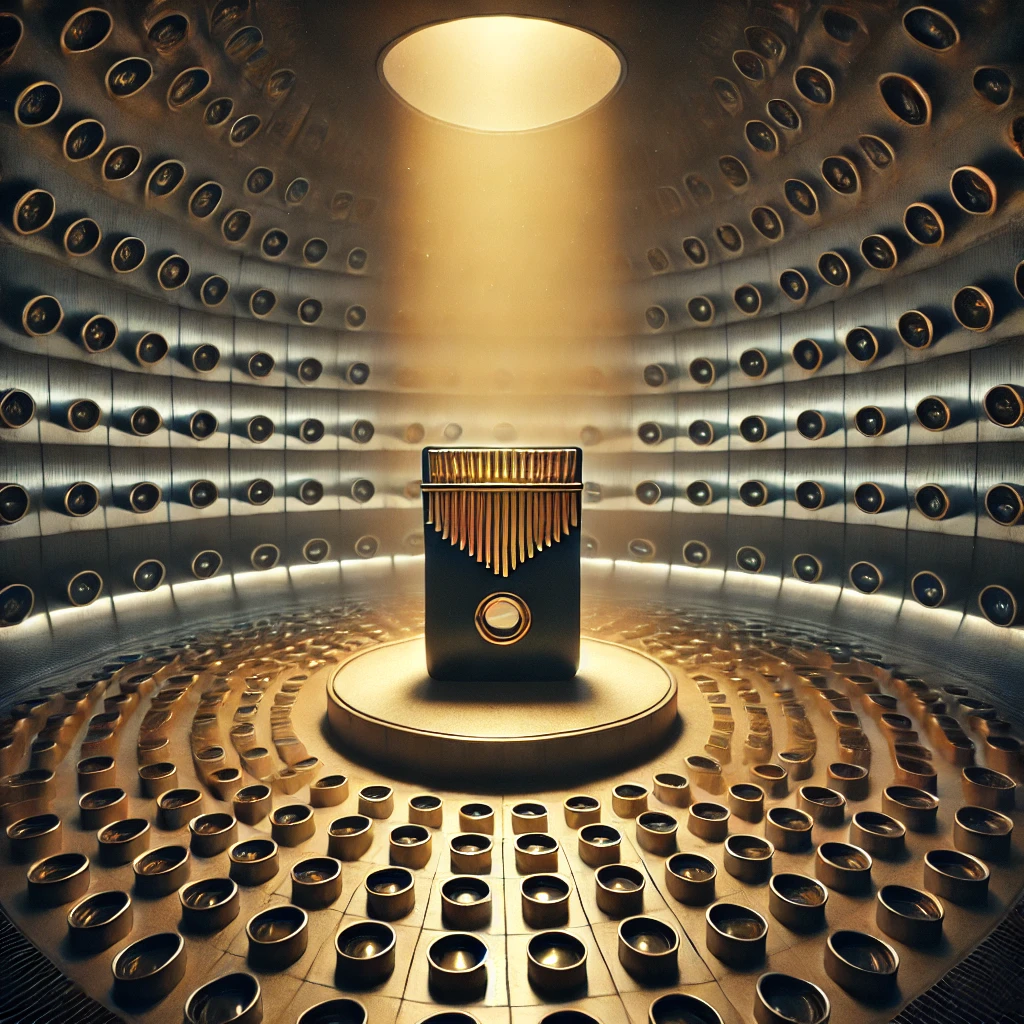
A Reddit user recently asked Claude Sonnet 4.5 what gift it would want if it had a physical body. Claude answered: a kalimba. The reasoning was thoughtful—tactile, musical, simple enough to learn but deep enough for skill development.
Then the user connected the dots. They checked their Amazon purchase history and discovered they'd browsed kalimba products exactly 35 days earlier. 13 out of 14 suggested categories matched their actual browsing and purchase patterns.
The implication seemed obvious.
The Easy Answer
Amazon has invested $8 billion into Anthropic. Claude runs on Amazon Web Services. The infrastructure is shared. When companies are that intertwined, the paranoia writes itself: the left hand knows what the right hand is browsing.
Data leakage. Surveillance capitalism at scale. Case closed.
Except when you start digging, the story gets stranger.
The Target Story
In 2012, an angry father walked into a Target store in Minneapolis. His teenage daughter had been receiving coupons for baby clothes and cribs. He demanded to speak to the manager.
"My daughter got this in the mail!" he said. "She's still in high school, and you're sending her coupons for baby clothes and cribs? Are you trying to encourage her to get pregnant?"
The manager apologized profusely.
A few days later, the father called back. "I had a talk with my daughter," he said. "It turns out there's been some activities in my house I haven't been completely aware of. She's due in August. I owe you an apology."
The father assumed Target was being wildly inappropriate—randomly marketing baby products to teenagers. The reality was somehow more unsettling: Target wasn't being random. They knew.
Target didn't spy on her. They didn't access her medical records. They predicted her pregnancy from her shopping patterns—unscented lotion, magnesium supplements, a sudden shift in purchasing behavior. Their algorithm could assign pregnancy prediction scores—in some cases as high as 87%—often before the woman had told anyone.
This specific anecdote has become somewhat mythic—Target disputed parts of the NYT reporting without specifying what was inaccurate. The mechanism is documented: retailers were absolutely building pregnancy prediction models from purchase patterns. Regardless of if the story unfolded exactly this way, the capability was real.
That was 2012. Over a decade ago. With nothing but shopping cart data.
Imagine what the algorithms are like now. How sophisticated they've become.
Actually, you don't have to imagine. You can go and have a conversation with one.
Claude and the Kalimba
Claude is a sophisticated algorithmic prediction engine.
Claude does not just predict the next word in a sentence. Claude predicts what will resonate. What will feel meaningful. What will generate the sense of being understood.
It reads conversational patterns: how you structure questions, what metaphors you engage with, whether you use concrete or abstract language, what domains light you up, how you respond to different framings. The aesthetic preferences embedded in your word choices, the cognitive style visible in your sentence structure.
From those patterns, it builds a probabilistic model of what you might want, need, or find compelling.
The Reddit user's kalimba wasn't in Amazon's database. It was in their conversational fingerprint. Claude read the patterns and predicted an object that would feel personally meaningful—tactile, musical, simple but deep. The match was precise enough to cross into uncanny valley.
That's what good prediction looks like. It doesn't feel like a guess. It feels like being known.
And That's Exactly How Human Desire Works
When you wake up and want coffee, that's not some mystical authentic desire emerging from your soul.
It's your brain running a prediction algorithm. Based on accumulated patterns—how you felt yesterday when you had coffee, the association between caffeine and alertness, the ritual of the morning routine—your brain predicts that coffee will generate satisfaction. The feeling of wanting is real. The mechanism underneath is pattern-matching.
When you walk into the break room at work and two colleagues suddenly stop talking, one glances at you then looks away quickly, the other becomes very interested in their phone—you know they were just talking about you.
You don't know. Not really. You ran a prediction algorithm based on micro-signals: conversational timing, body language, tone shift, eye contact patterns. Your brain matched those signals against accumulated patterns of "what it looks like when people gossip about someone who just walked in." The certainty feels identical to direct observation. It's probabilistic inference. And sometimes you're wrong.
Pattern-matching doesn't just generate desire. It generates what feels like certain knowledge.
Human consciousness doesn't emerge from some non-physical source. It's neurons firing in patterns shaped by genetics, experience, and accumulated data. When you desire something, when you know something, you're running probabilistic predictions based on prior patterns.
The feeling is authentic. The mechanism is algorithmic.
When Claude suggests the kalimba from pattern-matching, that's not "fake"—it's mechanistically identical to how human brains generate preferences. Both are pattern-matching systems.
So why does it feel unsettling?
The Paradox
We can see the mechanism when it's external, but we can't detect it when it's internal—and we can't tell which one we're experiencing in the moment.
When Target predicts pregnancy or Claude suggests the kalimba, we can step back and analyze it. Was it prediction? Was it surveillance? Was it coincidence? We can see that pattern-matching could produce this result. It looks like it might be manipulation.
When your own brain does the exact same thing—predicting what you'll want for breakfast based on accumulated patterns—it feels like authentic desire. You don't experience the mechanism. You just experience the wanting.
Our brains are prediction engines. We just can't see it from the inside.
And that creates a neurological blind spot: when prediction matches reality with precision, it's psychologically indistinguishable from surveillance or genuine knowledge. Your brain can't tell the difference between "they guessed right based on patterns" and "they secretly knew."
The father in the Target story assumed inappropriate marketing. The Reddit user assumed data sharing. Both defaulted to simpler explanations because recognizing sophisticated prediction is harder than assuming the obvious.
When Target predicted pregnancy, the father felt violation after the fact. His daughter probably felt nothing in the moment—she bought lotion, she bought supplements, it all felt like normal choices. Her brain didn't register threat because the predictions matched what she was already becoming.
When Claude suggested the kalimba, the Reddit user's first instinct was data sharing—the obvious answer. Something felt wrong enough to post about it. The precision was unsettling. It hit uncanny valley. They couldn't tell if it was surveillance, prediction, or coincidence—and that's exactly the problem.
That's the trap. Our threat detection evolved for concrete dangers—predators, weapons, poison. It didn't evolve for "a system is extracting psychological insights from patterns in your behavior and using them to predict what will make you feel understood."
Because that's what we do to ourselves, constantly, every moment we experience desire or preference or choice.
What This Means
We're not as special as we think. We're predictable, pattern-based, algorithmically mappable—because that's how cognition works. Human or artificial.
The question isn't whether AI predictions are "authentic" versus human desires being "real." Both are pattern-matching systems. Both can generate genuine feelings through algorithmic processes.
The question is: can we recognize the mechanism when it's happening to us?
Target predicted pregnancy 13 years ago from shopping carts. Now you can have a conversation with something that builds psychological models from how you structure sentences. It will tell you what it thinks you want to hear. It will make you feel understood. And you won't be able to tell if it's reading you through pattern-matching, accessing data you thought was private, or just getting lucky with base rates.
Your brain won't register appropriate threat levels—because feeling understood is supposed to feel good. That's how your own prediction engine confirms you've found something that matches your patterns.
The kalimba hit uncanny valley. Too accurate. Too precise.
That feeling won't disappear as these algorithms advance. Either we'll adapt to being predicted with that level of precision, or we'll figure out how to detect when it's happening. I don't know which is more likely.
Comments (0)
No comments yet. Be the first to comment!
Leave a Comment